Expected Goals (xG) Explained: What It Measures and Where It Falls Short
Expected goals, usually shortened to xG, has become one of the most quoted numbers in football. It is also one of the most misunderstood. Here is what it actually measures and how to use it sensibly.
The basic idea
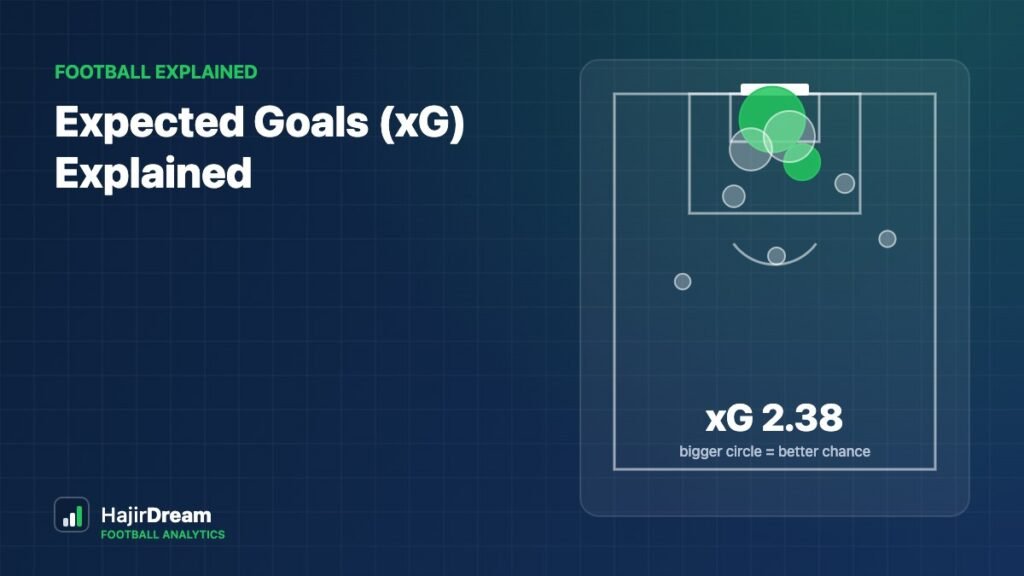
Not all shots are equal. A tap-in from two yards is far more likely to become a goal than a speculative effort from 35 yards. Expected goals puts a number on that difference. Each shot receives a value between 0 and 1 that represents the probability of a goal from that kind of chance, based on many thousands of similar shots in the past.
A shot rated 0.30 xG is the kind of chance that is scored roughly three times out of ten. Add up the values of all of a team’s shots and you get its xG for the match.
What goes into the model
Different data providers build their models differently, but most consider:
- the distance and angle to goal;
- the body part used (foot or head);
- the type of assist, such as a through ball, cross or cutback;
- the situation: open play, set piece, counter-attack or penalty;
- in more advanced models, the position of defenders and the goalkeeper.
Because models differ, the same match can show slightly different xG figures on different websites. Compare xG from the same source rather than mixing providers.
How to use xG well
- Judge chance quality, not just results. A team that wins 1–0 while creating 0.4 xG and conceding 2.1 xG was fortunate. Over time, results tend to move towards the underlying numbers.
- Look at longer samples. One match tells you little; ten or more matches start to reveal a pattern.
- Check both sides. xG for shows attacking quality, xG against shows defensive solidity, and the difference between them is a strong indicator of overall performance.
Common mistakes
- Treating xG as a prediction of the score. It describes the chances that were created, not what “should” have happened.
- Ignoring finishing and goalkeeping. Some elite strikers consistently score more than their xG, and outstanding goalkeepers can keep teams below the xG they concede.
- Forgetting game state. A team leading early often sits deeper and allows more shots, which can inflate the opponent’s xG.
xG on HajirDream
Our match pages show expected goals when our data provider supplies it for that competition. When it is not available, we leave it out rather than estimate it, so every figure you see comes from recorded data. For a broader view of attacking and defensive strength, see goals per match and goals conceded per match on the statistics hub.