How to Read a Football League Table: Every Column Explained

A league table looks simple, but it packs a whole season into a few columns. Once you know what each number means and where the table can mislead you, it becomes one of the most useful tools for understanding how a team is really doing.
The standard columns
- P (Played): matches completed so far. Always check this first. Two teams on the same points are not equal if one has played a game fewer.
- W, D, L: wins, draws and losses. In every major European league a win is worth three points and a draw one.
- GF and GA: goals for (scored) and goals against (conceded).
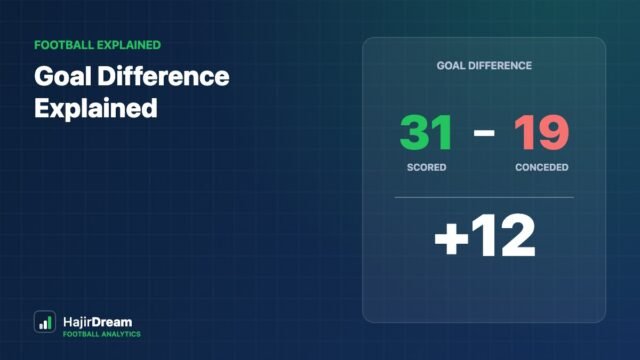
- GD (Goal difference): goals scored minus goals conceded. A positive number means a team has scored more than it has let in.
- Pts (Points): three times the wins plus the draws. This is what decides the final positions.
- Form: the results of the most recent matches, usually the last five, shown oldest to newest.
How ties are broken
When clubs finish level on points, leagues use different rules. The Premier League and the Bundesliga look at goal difference first, then goals scored. La Liga and Serie A look at the head-to-head record between the tied teams before overall goal difference. This is why two teams with identical points can be ordered differently from one league to another.
Why home and away tables matter
The overall table hides an important detail: where the points were won. Some teams collect most of their points at home and struggle on the road, while others are more consistent. Splitting the table into home and away views shows this immediately and often explains results that look surprising at first.
Points per game: the fairer comparison
Early in the season, or after postponed matches, teams can have played different numbers of games. Dividing points by matches played gives points per game, which lets you compare sides fairly. The same idea works for goals: goals scored per match and goals conceded per match are better guides than raw totals when the number of games differs.
What the table does not tell you
- Strength of schedule. A team that has already played the top sides may sit lower than its quality suggests.
- How results were achieved. A narrow 1–0 and a dominant 4–0 both earn three points. Goal difference helps a little, but shots, chances and expected goals tell you more.
- Recent changes. A new coach or key injuries can change a team quickly, and season totals react slowly. Recent form and the last 10 matches give a better picture of the present.
A quick checklist
- Check matches played before comparing points.
- Look at goal difference to judge how convincing a team has been.
- Compare home and away records.
- Use points per game and goals per match when games played differ.
- Read recent form alongside the season totals.
You can put all of this into practice on our league pages, which include overall, home and away tables for each competition, and on the statistics hub, which compares teams across Europe’s top five leagues.